Back to insights
Article/ Industry Insights
Why Phosphoramidite Purity Is Not Enough: Impurity Propagation in Oligonucleotide Manufacturing
39 min read
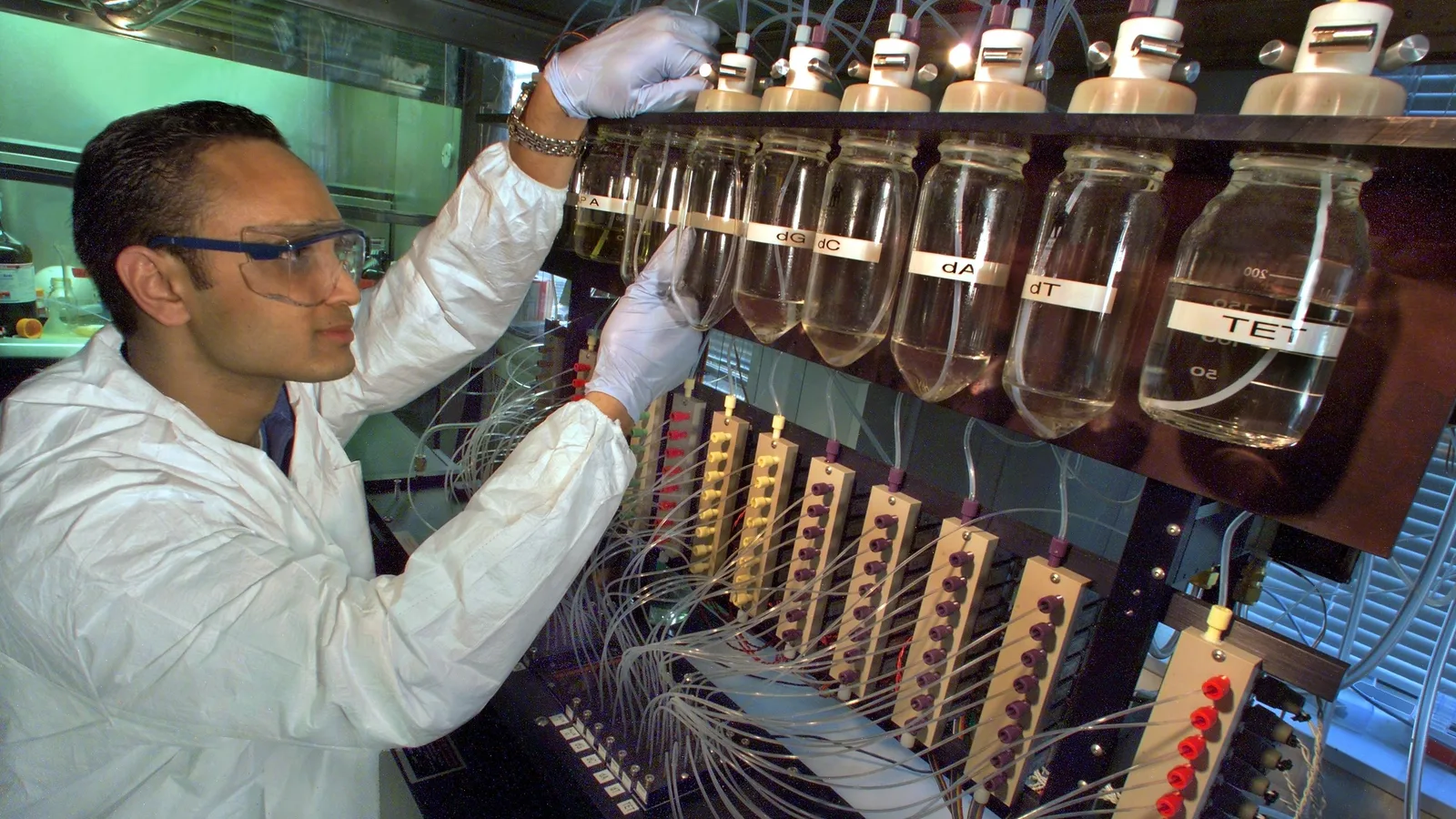
A certificate of analysis for a nucleoside phosphoramidite usually leads with an assay figure. The number is necessary. It is also close to silent on what decides whether that monomer is safe to put into a therapeutic oligonucleotide process.
What the assay does not describe is what the remaining fraction can do. With respect to direct incorporation, a non-incorporable impurity primarily affects effective monomer content and process performance. An incorporable impurity creates a different category of risk, because it may become part of the product: each use of that monomer creates another opportunity for the impurity to be incorporated, and once incorporated, the resulting product-related impurity may persist and can be difficult to purge from closely related full-length material.
That asymmetry is written into the way regulators reason about where an oligonucleotide manufacturing process is allowed to begin. ICH Q11 sets out the general principle that impurities introduced early in a synthesis typically have more chances to be removed by later purification operations than impurities generated near the end, and are correspondingly less likely to be carried into the drug substance. It then names an exception in the same paragraph: where peptides or oligonucleotides are synthesised on a solid support, "there is a more limited relationship between risk and number of steps from the end of the manufacturing process" (ICH, Q11 Development and Manufacture of Drug Substances, Step 4 version, 1 May 2012).
Much of what is difficult about oligonucleotide raw-material qualification follows from that clause. In a conventional small-molecule route, earlier introduction often creates more opportunities for purge; in solid-phase oligonucleotide synthesis, ICH Q11 cautions that this relationship is more limited.
Two boundaries are worth setting immediately. Phosphoramidites are not the origin of every oligonucleotide impurity — deletion and truncated sequences, abasic species, incomplete deprotection products and backbone substitutions come from the cycle chemistry itself, and are treated separately. And nothing here argues that assay testing is unimportant; the argument is that assay alone is an incomplete description of risk, and that a more decision-relevant unit of phosphoramidite quality is a per-impurity reactivity classification.
A 99% Assay Is a Number, Not a Risk Description
Consider two lots of the same protected monomer, released at the same assay figure and meeting the same total-impurities limit. In one, the residual material is hydrolysed nucleoside H-phosphonate and a bis-DMT nucleoside — species with no capacity to be coupled. In the other, part of it is a positional isomer in which the dimethoxytrityl and phosphoramidite groups have exchanged positions on the sugar. Those two lots are not equivalent inputs, and the headline assay alone does not distinguish them.
The EMA draft guideline on oligonucleotide development and manufacture makes the distinction explicit for phosphoramidite starting materials. It identifies as critical those impurities that "can react like the parent compound during coupling", giving the 3'-DMT-5'-amidite isomer as its example, and states that these should be controlled and limited in the starting-material specification (EMA, Guideline on the Development and Manufacture of Oligonucleotides, EMA/CHMP/CVMP/QWP/262313/2024). That document is a draft, released for public consultation on 22 July 2024 with comments closing on 31 January 2025; it is cited throughout this article as a draft position, not as adopted European requirement.
The same reasoning already appears in the assessment record of an approved product. Assessing inclisiran, the CHMP recorded that the applicant had classified phosphoramidite starting-material impurities as critical or non-critical, on the basis that critical impurities "can be incorporated into the active substance during various steps of synthesis cycle" while species that cannot be incorporated, and so do not affect final product purity by that route, are treated as non-critical (EMA, Assessment Report: Leqvio, EMA/696912/2020, 15 October 2020).
The classification axis there is reactivity, not level. The same report records the applicant committing to tighten the phosphoramidite specification limits once data from a further eighteen commercial batches were available — a specification treated as a live control point, not a settled document.
| What the headline assay establishes | What it leaves open |
|---|---|
| The reported proportion of intended monomer under the assay method | Whether the balance can be coupled at all |
| That total impurities sit below a limit | Whether one impurity is a positional isomer and another an unreactive hydrolysis product |
| Batch-to-batch consistency of the number | Batch-to-batch consistency of the composition behind the number |
| Conformance to an agreed specification | Whether that specification was set against incorporation risk or against what the method could see |
| A basis for calculating the amount of intended monomer charged | Which sequence variants the lot could create, and at which cycles |
| Nothing about water content unless separately tested | Whether moisture will suppress coupling and shift the impurity profile toward deletion sequences |
Table 1. Headline purity versus manufacturing-relevant risk for a nucleoside phosphoramidite.
The EMA draft lists the quality attributes generally expected for phosphoramidite starting materials — appearance, identification, assay, impurities, purity, water content and residual solvents — typically controlled by liquid chromatography with UV and/or MS detection, with ³¹P NMR available as an additional check on starting-material purity.
Iterative Synthesis Turns a Local Failure Into a Sequence Problem
Solid-phase oligonucleotide synthesis is a small set of reactions repeated many times: the chain is built on a solid support by cycles of deprotection, coupling, oxidation or sulfurisation and capping, followed by cleavage and deprotection.
The consequence of that repetition is structural rather than incidental. In a linear small-molecule route, a side reaction at one step produces one impurity, which the remaining steps may or may not purge. In an iterative synthesis, a side reaction of a given type can occur at any cycle, each occurrence producing a chemically distinct species differing from the others only in position. One mechanism becomes a family of products.
This is not unique to oligonucleotides — ICH Q11 names solid-phase therapeutic peptides in the same clause — but chain length, backbone modification and the absence of intermediate isolation make it unusually consequential here.
For a monomer-derived impurity, a first-order approximation is available. If a monomer lot contains an incorporable impurity at fraction p, and that monomer is used at m positions, then under the simplifying assumptions that incorporations are independent and equally probable at each use, the fraction of chains carrying at least one such defect is 1 − (1 − p)^m. For small p, this is approximately mp. A supplier technical note on phosphoramidite impurity classification gives the worked illustration: a critical impurity at 0.2% in a monomer used eight times in a 20-mer, giving about 1.6% (Thermo Fisher Scientific, TheraPure DNA and RNA phosphoramidites, technical note COL24295, 2020 — a supplier document, used here for the arithmetic and the classification scheme rather than for any regulatory conclusion).
The approximation is a framing device, not a prediction, and it can sit on either side of the real number. The actual level depends on the impurity's coupling competence relative to the parent amidite, on competition between the two at each coupling, on sequence context, on cycle conditions, and on whether the incorporated species survives cleavage and deprotection and is recovered through purification. Whether a structurally competent impurity couples appreciably under a particular activator, concentration and cycle time does not appear to be published in general form; it is an impurity- and process-specific experimental question.
What survives the caveats is the shape of the relationship, which the EMA draft states in the same terms: reactive impurities in starting-material building blocks may be incorporated during assembly and are then usually persistent, ending up in the final active substance at a level depending both on their level in the building block and on the incorporation frequency of that building block in the chain.
Incorporation frequency is a sequence property, so the acceptable impurity level in a monomer is not a property of the monomer alone: the same lot can be comfortable for one sequence and marginal for another that uses it eleven times.
The cycle itself is also less fully characterised than its ubiquity suggests. A 2025 kinetic modelling study notes that "the kinetics of this process remain incompletely understood", and quantifies how concentrations, step duration and stoichiometry govern coupling, capping, oxidation and detritylation (D. E. Pfister et al., Kinetic Modeling of Solid-Phase Oligonucleotide Synthesis, OPRD 2025, 29, 2298–2309). Parameters that shift stepwise coupling efficiency shift the deletion-sequence burden with them.
"n-1" Is a Family, Not a Compound
Nothing illustrates the positional-family problem better than the term the field uses most casually.
An "n-1" impurity is any full-length-minus-one-residue species, and for a 20-mer the deletion can sit at any of twenty positions. Several of those variants can share the same molecular formula, and therefore the same nominal mass, while being chemically distinct molecules with distinct hybridisation behaviour and, potentially, distinct biological consequences. A mass spectrometer reports the loss; intact mass alone does not report where it occurred.
The EMA draft separates the mechanisms that generate short and long variants. Deletion sequences are missing one or several building blocks, and it lists incomplete detritylation, sulfurisation or oxidation among the conditions under which they can form. Truncated sequences are the acetylated fragments produced deliberately when capping terminates chains that failed to couple; the draft notes that the majority of these are removed by further downstream processing, so capping converts an uncontrolled problem into a more separable one. Insertion sequences arise when a building block is coupled more than once in a cycle, which the draft attributes to causes including premature deprotection during prolonged coupling and suboptimal activator concentration. In each case the draft offers example causes rather than an exhaustive or universal mechanism.
An analytical study of early-eluting impurities — species shorter than the main component — attributes their formation primarily to coupling failure and depurination (S. G. Roussis, I. Cedillo, C. Rentel, Automated determination of early eluting oligonucleotide impurities using IP-RP HPLC HRMS, Anal. Biochem. 2020, 595, 113623): two different upstream failures converging on the same analytical region.
Because individual positional variants often cannot be resolved from one another, the accepted practice is to report them as a group. The EMA draft gives an example set for a phosphorothioate antisense oligonucleotide: full length (P=O), total n-1, total n+1, total abasic, CNET, dithioate/thioate, and early- and late-eluting impurities. The FDA's draft guidance on individualized antisense oligonucleotide products likewise recommends grouping oligonucleotide-related impurities by structural class or relative retention time where appropriate (FDA, IND Submissions for Individualized Antisense Oligonucleotide Drug Products … CMC Recommendations, draft guidance, December 2021, marked "Draft — Not for Implementation"). The Leqvio assessment records the same practice in a marketed product, with impurities grouped by adjusted relative-retention-time ranges — accepted by the assessors as commonly applied for synthetic oligonucleotides with, in their words, an "extremely complex impurity profile".
Grouping is a reasonable engineering answer to a real analytical constraint. It is also a concession: a group limit bounds the summed burden of a class without establishing that composition within the class is constant between batches, or between a reference product and a copy. The EMA draft handles this by tiering — below its proposed 1.5% qualification threshold, no further characterisation of individual sequences within an n-1 or n+1 group is expected; above it, the sequences are to be identified separately. Those figures, together with a proposed 1.0% identification threshold for product-related impurities of single-strand molecules, are values in a draft guideline rather than settled European requirements, and could change at adoption.
A Reactivity-First Taxonomy of Phosphoramidite Impurities
Two classification schemes are in play, and they should not be conflated. The regulatory documents use a binary — critical (incorporable) versus non-critical (not incorporable) — because that is the distinction a specification has to act on, and it is what the EMA draft and the Leqvio assessment apply.
Separately, a supplier technical note sets out a three-tier scheme: nonreactive and noncritical; reactive but noncritical; and reactive and critical. This is one manufacturer's framework rather than an industry-wide or regulatory taxonomy, though its underlying axis is the same. Its third tier is the operative one: impurities incorporated during synthesis such that the resulting oligonucleotides are "difficult or impossible to separate from the desired synthesis product", together with those hard to detect once incorporated. Within it the note distinguishes unnatural base modifications; bis-ribose or deoxyribose species; species with unprotected or wrongly protected bases and sugars; and structural isomers — which it calls "perhaps the greatest theoretical impurity risk" — including alpha-anomers and the inversion producing the 3'-DMT-5'-amidite form.
That last subclass is the one the EMA draft picked as its own worked example, for analytical rather than chemical reasons: a positional isomer shares the parent monomer's molecular formula, so mass cannot distinguish it, and its similarity to the material it contaminates can also make chromatographic and ³¹P NMR resolution difficult.
| Class | What it is | Behaviour in the cycle | Why it is or is not a product risk | Where it is controlled |
|---|---|---|---|---|
| Non-reactive, non-critical | No coupling-competent phosphoramidite centre — hydrolysed H-phosphonates, bis-DMT nucleosides, phosphite by-products | Not incorporated | Reduces effective monomer content and can affect process performance; does not enter the sequence by this route | Monomer assay and yield reconciliation |
| Reactive, non-critical | Altered 5'-trityl, aminoalkyl or base protection | Enters the chain, then may behave differently enough downstream for separation to be achievable | Manageable through purification and routine analysis, depending on the resulting structure and method | Monomer specification plus purification |
| Reactive, critical — structural isomers | 3'-DMT-5'-amidite inversion; alpha-anomers; 3'-TBDMS-2'-amidite inversion in RNA chemistry | Couples; in the DMT-inverted case the group removed at detritylation is not the one intended | Same formula and mass as the parent; mass alone cannot distinguish it, and chromatographic separation may also be difficult | Incoming-material control is therefore especially important |
| Reactive, critical — modified base or sugar | An unintended base or sugar modification on the monomer | Couples normally, giving full-length product with one altered residue | Correct chain length, one residue different; may be difficult to resolve from the intended product | Monomer specification; orthogonal analytics |
| Reactive, critical — dimeric or bis-amidite species | Bis-nucleoside amidites and species with two phosphoramidite centres, listed as reactive and critical in the supplier scheme | Coupling-competent at more than one centre | Chain-level consequences are described in a supplier document, not in the regulatory sources reviewed here, and need product-specific confirmation | Monomer specification |
| Anomeric and nucleoside stereochemistry | Stereochemical purity of the nucleoside itself, including anomeric configuration | Nucleoside chiral centres are not expected to invert under normal cycle conditions, so this carries through | An incorporated alpha-anomer is a structural variant of the product | Monomer stereochemical purity; the EMA draft expects anomerisation propensity to be discussed |
| Water and other process-relevant attributes | Moisture, residual solvents, activator-relevant contaminants | Can suppress or slow coupling | Not an impurity in the product; a driver of deletion sequences in it | Monomer specification; storage and handling |
Table 2. A reactivity-first taxonomy of phosphoramidite impurities, their behaviour in the cycle, and where each is realistically controlled. The three-tier language derives from a supplier scheme; the critical/non-critical axis is the one used in the regulatory sources cited above.
One row is deliberately absent: the diastereomeric composition of the monomer's own phosphorus centre. For phosphorothioate products the EMA draft states that internucleotide-linkage stereochemistry is determined during coupling, so the final distribution is a function of coupling, sulfurisation and any stereocontrol strategy — not something inferable from the incoming monomer's P-centre composition. Nucleoside stereochemistry does carry through, which is why it has its own row.
The water row is the one most easily left off an impurity discussion, because water is not an impurity in the finished oligonucleotide. It is, however, a direct route from monomer quality to sequence-related impurity burden: moisture that suppresses coupling efficiency appears in the product not as water but as deletion sequences.
Structural competence is a risk hypothesis, not a demonstrated outcome. A reactive phosphoramidite centre establishes that incorporation is chemically possible; whether it incorporates appreciably under a given activator, concentration and cycle time is a question for the specific process. The regulatory record confirms that incorporable impurities exist and are controlled as such — not that every structural analogue behaves identically.
Where in the Cycle Each Risk Is Created
Monomer quality is one input to a cycle with several other ways of going wrong, and separating them is what makes a control strategy diagnosable. In the EMA draft, the causes below are examples of how each impurity class can arise, not the only or universal mechanism.
Detritylation. Removing the 5'-DMT group with acid exposes the hydroxyl for the next coupling; the same acid exposure depurinates. A kinetic study of CPG-bound intermediates measured depurination half-times across dichloroacetic and trichloroacetic acid conditions and framed the result as the need to balance "maximum detritylation with minimum depurination" (M. Septak, Kinetic studies on depurination and detritylation of CPG-bound intermediates during oligonucleotide synthesis, Nucleic Acids Res. 1996, 24, 3053–3058). The study used DNA model compounds, so its half-times do not transfer to modified chemistries; the tension does. Incomplete detritylation is listed among the conditions producing deletion sequences, and poorly controlled detritylation among those producing abasic species.
Activation and coupling. Activator concentration, monomer excess and coupling time influence both stepwise efficiency and the side-reaction burden. The EMA draft cites suboptimal activator concentration as one cause of insertion sequences, and the kinetic modelling study treats concentration, step duration and stoichiometry as governing variables.
Capping. Acetylating chains that failed to couple prevents them re-entering the sequence at the next cycle — a deliberate trade converting potential internal deletions into truncated, acetylated fragments largely removed downstream. Poorly controlled capping has its own signature: the draft notes that base acetylation can occur when the step is suboptimally controlled.
Oxidation or sulfurisation. For phosphorothioate backbones, the step that installs sulfur also determines how much phosphodiester ends up in the product. The EMA draft gives suboptimal oxidation or capping conditions, inadequately controlled phosphorus deprotection, and insufficiently aged oxidiser solution as example causes of PO-in-PS impurities. Reagent age is worth pausing on: a process parameter with an impurity consequence, invisible in any monomer specification.
Cleavage and deprotection. Stripping the product from the support generates its own species: partially deprotected chains, abasic sites where the step is suboptimally controlled, and cyanoethylthymine (CNET) impurities, which the draft describes as an acrylonitrile adduct on the heterocyclic base arising from suboptimal phosphorus deprotection. It also notes cross-linked oligonucleotides, formed by condensation of the parent with a shorter abasic-containing chain or of two growing chains.
Conjugation and annealing, where applicable. Among the inclisiran duplex's product-related impurities, the assessment lists carry-over from parent starting-material impurities, particularly those associated with the triantennary GalNAc portion of the sense strand: the conjugate ligand is itself a starting material with its own impurity profile and fate-and-purge assessment. For duplex products the burden multiplies rather than combines — the EMA draft expects three sets of impurity specifications, for the sense strand intermediate, the antisense strand intermediate and the final drug substance, because analytical separation capacity is better at the single-strand level. That contains a general principle: as the molecule gets larger and more complex, resolving power falls, so control migrates upstream to where the analysis still works.
Modified Monomers Change the Control Problem, Not Just the Molecule
Approved oligonucleotide therapeutics rest on a comparatively small set of chemistries: 2'-fluoro-RNA, 2'-O-methyl RNA, phosphorothioate linkages, 2'-O-(2-methoxyethyl)-RNA (MOE) and the phosphorodiamidate morpholinos, with GalNAc conjugation for hepatocyte delivery (M. Egli, M. Manoharan, Chemistry, structure and function of approved oligonucleotide therapeutics, Nucleic Acids Res. 2023, 51, 2529–2573).
A small modification set does not imply a common control strategy. Each modification changes the monomer's synthetic route, protecting-group scheme, characteristic impurities and analytical behaviour — which is why the EMA draft asks for more manufacturing and impurity-profile detail for complex modified derivatives.
Phosphoramidites derived from ribonucleosides with a protected 2'-hydroxyl introduce an additional positional-protection problem. For those monomers the supplier taxonomy lists inversion of the 2' and 3' ribose protecting groups, giving a 3'-TBDMS-2'-amidite, alongside the 5'/3' DMT inversion DNA chemistry already has: two isomer axes instead of one. The point is specific to a 2'-OH protecting group; 2'-F and 2'-O-methyl monomers have no 2'-hydroxyl to protect and do not present this axis.
Phosphorothioate backbones add stereochemistry. The EMA draft states the combinatorics plainly: the phosphorus atoms of phosphorothioate linkages are chiral, their stereochemistry is determined during coupling, and the reaction delivers a mixture of 2ⁿ diastereomers, where n is the number of phosphorothioate linkages.
That figure counts theoretical stereochemical states, not impurities that have been detected, separated or quantified. Slides presented at the FDA's Generic Drugs Forum in April 2026 make the same combinatorial point, noting more than half a million diastereomers implied for the samples in an adapted figure (L. Liang, Quality Considerations for Generic Oligonucleotides, Generic Drugs Forum 2026, FDA White Oak Campus, 22–23 April 2026). That presentation carries a disclaimer on its own slide — "This presentation reflects the view of the author and should not be construed to represent FDA's views or policies" — and is treated here as an individual regulator's technical presentation, not as guidance or policy.
The operating constraint sits next to the theoretical number, and it is much smaller. A comparison of methods for characterising phosphorothioate diastereoisomeric distributions reports that chromatographic separation of individual diastereoisomers "is limited to oligonucleotides that contain no more than about four or five PS linkages", while therapeutic phosphorothioate oligonucleotides often contain more than fifteen — which is why the practical objective becomes assessing batch-to-batch stereo-reproducibility rather than resolving individual species (S. G. Roussis, I. Cedillo, C. Rentel, Characterizing the Diastereoisomeric Distribution of Phosphorothioate Oligonucleotides…, Anal. Chem. 2021, 93, 16035–16042).
The EMA draft asks for that substitute: where separating the diastereomers is not practically possible, it expects an estimate of the distribution and its reproducibility. The Leqvio assessment shows one acceptable answer — a method able to separate that molecule's diastereoisomers, with peak distributions consistent across batches. That product carries four phosphorothioate linkages in the antisense strand and two in the sense strand, inside the range where individual separation is feasible; a twenty-linkage gapmer is not the same problem wearing the same name.
Phosphodiester linkages are not phosphorus-stereogenic, so this particular linkage-stereochemistry problem does not apply to an unmodified phosphodiester backbone — which is not to say such a backbone is free of the other impurity classes described above. Phosphorodiamidate morpholinos have their own chiral linkage and combinatorics; conjugated structures add a non-nucleotide starting material with an independent impurity profile. This is the concrete sense in which one control strategy does not fit all modifications: the questions differ, not merely the limits.
Why Purification Cannot Be the Only Safety Net
The most useful way to see the purge asymmetry is to look at what does purge well.
A study measuring purge factors across oligonucleotide unit operations found substantial purging capability for non-oligonucleotide process-related impurities — synthesis >1000, cleavage and deprotection >100 where reactivity applies, chromatography >1000, ultrafiltration/diafiltration >10 — with overall purge factors of at least 1×10⁷, and concluded that purge arguments are a sound scientific approach for that class, with typical solvents and reagents robustly cleared by the process (Y. A. Fillon et al., Determination of Purge Factors for Use in Oligonucleotide Control Strategies, OPRD 2022, 26, 1130–1144).
The scope of that result is the point. It concerns non-oligonucleotide process-related impurities — solvents, reagents and small molecules whose physicochemical properties differ sharply from a charged 20-mer. It is cited here as a contrast; it establishes nothing about whether product-related impurities can be removed. The Leqvio assessment reaches a comparable conclusion for that product's process-related organic impurities.
For impurities built into the chain, by contrast, the EMA draft states that, unlike in conventional small-molecule synthesis, downstream processing and purification are usually unable to purge them — and follows with the control conclusion that narrow acceptance limits should be set for reactive and critical starting-material impurities.
The reason is physicochemical rather than procedural. Depending on the structural change, some full-length variants may differ from the intended product only slightly in mass, charge or hydrophobicity, and a separation is then being asked to distinguish two molecules that are, from the column's perspective, nearly the same. Other structural changes are more separable, which is why the outcome is product- and impurity-specific rather than uniform. The EMA draft describes the crude mixture entering purification as typically containing pre-eluting, post-eluting and often co-eluting structurally related impurities.
Purification is also where yield is decided. A recent review notes that downstream processing "is often regarded as the bottleneck of therapeutic oligonucleotide production" (A. Abe, Z. Časar, Overview and Recent Advances in the Purification and Isolation of Therapeutic Oligonucleotides, OPRD 2025, 29, 15–33). Tightening a fraction-collection window to reject more of a closely eluting impurity discards more product with it — a trade the EMA draft expects to see made explicitly, through detail on fraction collection, mock pools and purification acceptance criteria.
None of which makes purification unimportant. It makes purification a bounded instrument with a known weak point, and moves the control for that weak point upstream, into the monomer specification and the cycle parameters. Once an incorporable impurity has entered the chain, downstream removal may become substantially more difficult, and has to be demonstrated rather than assumed.
The Analytical Blind Spot
If purification cannot be relied on to separate all product-related impurities, the fallback assumption is that analysis can at least see them. The regulatory and analytical literature both caution against relying on a single method.
The EMA draft acknowledges that full resolution of all individual product-related impurities is usually not technically achievable with one method, given a complex mixture of structurally related impurities many of which have about the same mass, and that a high number co-elute with the main peak. That is common enough that dedicated methodology exists for quantifying impurities that do it, conventionally by manual ion extraction and integration of each impurity's characteristic mass signal (S. G. Roussis, I. Cedillo, C. Rentel, Semi-quantitative determination of co-eluting impurities in oligonucleotide drugs using IP-RP LC-MS, J. Chromatogr. A 2019, 1584, 106–114).
Mass detection has its own limits, which is why "add MS" is not a general answer: isobaric species — different structures with the same mass — are not distinguished by mass alone. A two-dimensional LC study reports that a SAX × IP configuration separated the isobaric "n+16" doublet of the n+O and [n+S−O] species, described as not achievable by mass spectrometry alone or by 1D-LC, and, informatively, that an IP × IP configuration in that work did not provide orthogonal separation (S. G. Roussis, I. Cedillo, C. Rentel, Two-dimensional liquid chromatography-mass spectrometry for the characterization of modified oligonucleotide impurities, Anal. Biochem. 2018, 556, 45–52).
Orthogonality also carries practical costs. Anion exchange is genuinely orthogonal to ion-pair reversed phase, but conventional AEX methods using non-volatile salt gradients are generally not directly MS-compatible, while the triethylamine and hexafluoroisopropanol that make IP-RP work suppress ionisation and stress the instrument. These are engineering constraints, not a bar in principle: a two-dimensional IP-RP/AEX–HILIC/MS method was developed specifically to work around them (A. Goyon, K. Zhang, Characterization of Antisense Oligonucleotide Impurities by IP-RP and AEX Coupled to HILIC/MS…, Anal. Chem. 2020, 92, 5944–5951). For duplex products, the EMA draft expects both denaturing and non-denaturing analysis, the latter to quantify residual single strands.
| Method | What it can establish | What it leaves open |
|---|---|---|
| IP-RP-HPLC with UV | A resolved and grouped UV-detectable impurity profile under the method's conditions; a reproducible retention-time profile | Identity within a group; whether a peak is one species or several; anything co-eluting with the main peak |
| Anion exchange HPLC | An orthogonal selectivity axis, resolving species IP-RP does not | Conventional salt-gradient AEX is generally not directly MS-compatible, so identification needs an interface such as 2D-LC; limits for the same nominal group differ when measured this way |
| LC-MS: intact mass | Mass of full-length product and of mass-shifted impurities | Position of a deletion in the chain; isobaric species such as n+O versus [n+S−O]; positional isomers sharing a formula |
| LC-MS/MS: fragmentation | Sequence confirmation, given adequate fragment coverage and data quality | Confidence falls where coverage is incomplete or variants are close in structure |
| Two-dimensional LC | Separation of isobaric doublets unavailable to 1D-LC or MS alone | Orthogonality may stay limited where both dimensions rely on closely related selectivity; the cited IP × IP configuration did not resolve the reported case |
| ³¹P NMR | Backbone composition; PO-versus-PS content; diastereoisomeric distribution as a whole | Which specific linkage a signal belongs to |
| Non-denaturing methods for duplex products | Duplex integrity and residual single-strand content, which the EMA draft expects alongside denaturing analysis | Impurities within an individual strand |
| Grouped RRT reporting | That a structural class is bounded in total | Whether composition within the class is constant between batches or products |
Table 3. What common analytical approaches to oligonucleotide impurities establish, and what each leaves open.
Four distinct questions hide behind the word "control", and conflating them is a recurring source of over-claiming:
- Detection — a signal exists above the noise.
- Identification — the structure behind the signal is known. The EMA draft's identification threshold is the level above which structural identification of unknowns is expected.
- Quantitation — the level is measured with a validated response. The draft ties the reporting threshold to the method's lower limit of quantification, which itself depends on the size and complexity of the molecule.
- Qualification — the level is justified as safe. The draft's four-class scheme assigns different burdens: impurities that are major metabolites, or that contain only structural elements found in natural nucleic acids, need no further qualification even above the threshold; internal n-1 or n+1 variants are handled as a group below 1.5% and individually above it; species carrying elements found in neither, such as abasic impurities, require qualification above it.
A method that detects an impurity has not identified it, and a group that is quantified has not been characterised. The draft is also explicit that improving methods can surface impurities older methods never saw, asking for batch data to be compared and qualification reconsidered when that happens — better analysis does not only reduce risk, it can reveal risk that was always there.
A Different Route Is a Different Impurity Profile
Linear solid-phase synthesis is the default, but it is not the only option in development. Three questions follow from that.
Do the possible sequence errors change? Oligonucleotide drug substances share a common set of unit operations — solid-phase synthesis, cleavage and deprotection, purification, isolation — and that commonality is what makes platform approaches to development and filing possible (D. Altevogt et al., Platform Strategies for Synthetic Oligonucleotide Drug Substances, OPRD 2023, 27, 2211–2222). Where a route departs from the platform, the transferable part shrinks. The FDA presentation makes the point with a hypothetical 23-mer: built linearly, the characteristic impurities are chain-length variants missing or gaining one or two nucleotides; built from four blocks, a different characteristic failure appears — a species missing an entire block, with a different mass, retention behaviour and sequence consequence. The presentation raises the resulting questions about immunomodulating motifs, off-target effects and toxicity as questions rather than findings. In published practice, a kilogram-scale convergent liquid-phase route assembled tetramer and pentamer fragments into an 18-mer without column chromatography, reporting an impurity profile "similar to" material from standard solid-phase synthesis, with critical impurities controlled in the fragment syntheses (X. Zhou et al., Development of Kilogram-Scale Convergent Liquid-Phase Synthesis of Oligonucleotides, J. Org. Chem. 2022, 87, 2087–2110). "Similar" is the authors' word for one candidate molecule; no controlled public comparison of linear and convergent impurity profiles for the same commercial sequence appears to exist.
Do the unit operations change? Membrane-assisted liquid-phase synthesis has been reported for a 21-mer siRNA strand and a 16-mer gapmer, described by its authors as the first total liquid-phase synthesis beyond a 10-mer (P. R. J. Gaffney et al., Fully Liquid Phase Oligonucleotide Synthesis, OPRD 2026, 30, 98–120); a one-pot membrane route has reported 2'-OMe phosphorothioate syntheses using 1.5 equivalents of phosphoramidite (R. Kelly, C. Parga, S. Ferguson, Scalable Membrane Enabled One-Pot Liquid-Phase Oligonucleotide Synthesis, OPRD 2025, 29, 1577–1592). These are reported demonstrations rather than established commercial platforms. Lower monomer excess changes the operating balance and therefore requires route-specific evidence on coupling performance and impurity formation. The EMA draft records that liquid and enzymatic synthesis were considered too premature to include when it was written — a statement about the guideline's scope, not about the chemistry, which leaves no drafted regulatory expectation addressing those routes.
Does a recycled input become a controlled material stream? Acetonitrile consumption scales with synthesis volume, and its supply has been repeatedly disrupted. A European Pharma Oligonucleotide Consortium risk assessment categorised potential contaminants in recycled acetonitrile by process impact and removal feasibility, concluding that recycling is acceptable and recommended where contamination is mitigated through risk evaluation, partial waste segregation and adequate specification setting (B. I. Andrews et al., Considerations for Recycling of Acetonitrile in Oligonucleotide Synthesis, OPRD 2026, 30, 2119–2135). That is a consortium recommendation, not a regulatory position; EPOC is a multi-company effort to harmonise oligonucleotide CMC knowledge (A. Tivesten et al., Ther. Innov. Regul. Sci. 2018, 52, 687–688). Its conditions are the substance of it. A recycled solvent stream is a material with its own carry-over and cross-batch questions, sitting upstream of a coupling step already sensitive to water and trace contaminants.
From Incoming Specification to Control Strategy
The recurring structural point is that control migrates upstream as downstream instruments lose resolution. That produces a fairly clear division of labour.
Material attributes. For incorporable impurities, the monomer specification is the primary control, because later operations may not reliably substitute for it — which is where the EMA draft's narrow acceptance limits for reactive and critical starting-material impurities sit. Its usefulness depends on being written against a classified impurity profile, not a total.
Process understanding. Deletion, insertion, abasic, CNET, PO-in-PS and cross-linked species are cycle products, controlled through cycle parameters: acid strength and contact time, activator concentration, coupling time, capping efficiency, oxidiser age, deprotection conditions.
Fate and purge. ICH Q11's framework still applies; what changes is the answer. Purge arguments are well supported by measured purge factors for non-oligonucleotide process-related impurities; for incorporated product-related impurities the assessment shifts toward prevention, and the EMA draft asks for a fate-and-purge assessment of starting-material impurities on that basis.
Release testing. The last check, not the control. The FDA draft guidance for individualized ASOs shows how carefully release definitions have to be drawn: the strength assay is expected to report full-length content with the P=O impurity excluded where present, and identity from two or more methods. Grouped reporting stays comparable over a product's life only while the methods and reference standards behind it are stable.
Supplier Qualification, and Who Owns Which Question
Monomer supply is one point at which difficult-to-purge risk can enter an outsourced manufacturing process. The questions below separate into three owners, because treating them all as a supplier questionnaire misassigns work only the sequence owner can do.
| Question | Owner | What the answer tests |
|---|---|---|
| Which impurities in this monomer are classified as incorporable, and on what basis? | Supplier | Whether a reactivity classification exists at all, or whether "impurities" is one undifferentiated number |
| What are the individual limits for each critical impurity, as distinct from the total? | Supplier | Whether the specification can act on the distinction it claims to draw |
| How are positional isomers such as the 3'-DMT-5'-amidite form detected and quantified? | Supplier | Whether the method can see a species sharing the parent's formula and mass |
| Is ³¹P NMR used, and what does it add beyond the chromatographic method? | Supplier | Whether orthogonality exists in the monomer's own release testing |
| What is the anomeric and nucleoside stereochemical purity, and how is it measured? | Supplier | Whether the stereochemistry that does carry into the chain is characterised or assumed |
| What is the water specification, and how is the material packaged and shipped against it? | Supplier | Whether an attribute that drives deletion sequences is treated as functional or as housekeeping |
| What is the synthetic route, and which reagents and precursors does it use? | Supplier | Whether the impurity profile is explicable from the route; the EMA draft expects flowcharts and a criticality assessment |
| Which impurities vary most between lots, and what is the historical distribution? | Supplier | Whether variability is characterised, or every lot simply reported as conforming |
| What batch data support the current limits, and when would they be re-evaluated? | Supplier | Whether limits are provisional pending data, as the Leqvio record shows they can legitimately be |
| How is the monomer impurity profile translated into sequence-specific exposure, given the number and position of that monomer's incorporations? | Sponsor / CDMO | Whether the party that knows the sequence has done the incorporation-frequency assessment. The supplier provides classified impurity data; it generally does not know the full sequence and cannot take this step |
| Which incoming impurities have been shown, for this sequence and cycle, to incorporate appreciably? | Sponsor / CDMO | Whether structural competence has become product-specific evidence rather than an assumption either way |
| Under what circumstances would route, reagents, purification or site change, and how is that notified? | Quality agreement | Whether change control is a defined obligation — a route change can alter the impurity profile without moving the assay |
| Which impurities are specified individually, so a later revision is a controlled change? | Quality agreement | Whether the classification is contractually anchored |
| Which methods, reference standards and raw data are available on audit? | Quality agreement | Whether the classification can be verified rather than accepted |
Table 4. Phosphoramidite and modified-nucleoside qualification questions, grouped by who can actually answer them.
The same reasoning constrains what a specification can do: it cannot bound an impurity the method cannot resolve, and cannot anticipate a sequence-specific incorporation frequency the supplier does not know. Those limits sit with the party that knows the sequence.
Sequence Quality Begins Before the First Coupling Cycle
Compared with many stepwise small-molecule routes, conventional solid-phase oligonucleotide synthesis offers fewer intermediate isolation opportunities during chain assembly. The EMA draft notes that polymorphic form is generally not applicable here because most oligonucleotide powders are amorphous, so the crystallisation-based rejection available in some small-molecule routes is generally not part of oligonucleotide isolation. A full-length chain carrying one altered residue can therefore be difficult to separate from the intended product. ICH Q11 names the exception, the EMA draft describes its consequence, and the assessment record of an approved product shows a classification and specification strategy built around it.
That places three things in a different light.
A phosphoramidite specification is a control point in the drug substance process, not a goods-inwards formality. Its quality depends on whether it distinguishes impurities by what they can do, and on whether the methods behind it can see the species that matter — which, for positional isomers, is among the most difficult parts of the monomer question.
A final chromatographic purity value describes a boundary, not a composition, which is why regulators expect orthogonal methods, grouped reporting with characterisation behind it, and control at the level where the analysis still resolves.
And a route change should be treated as a potential impurity-profile change until comparability is demonstrated — for a blockmer strategy, a liquid-phase platform, a recycled solvent stream and a new monomer supplier alike. Equivalence is a result to be generated, not an inference to be drawn from an unchanged assay figure.
The compact version: the hardest impurity to control may be the one that still looks most like the intended sequence after incorporation.
Frequently Asked Questions
What does phosphoramidite purity actually measure?
An assay reports the proportion of intended monomer under that method, usually by liquid chromatography with UV or MS detection. It does not classify the remainder by whether those species can be coupled into a growing chain, and two lots with the same assay figure can carry different incorporation risk depending on that composition.
What is an incorporable impurity in oligonucleotide synthesis?
It is a monomer impurity that retains a reactive phosphoramidite centre and can therefore be coupled into the chain during synthesis. Regulatory assessment records use "critical" for these and "non-critical" for impurities that cannot be incorporated and so do not affect final product purity by that route.
Why can n-1 impurities be difficult to remove completely?
"n-1" is a group, not a single compound: variants differing in which residue is missing are not chemically identical, and some are more separable than others. Depending on the structural change, a variant may differ from the intended product only slightly in mass, charge or hydrophobicity — so partial separation is often achievable, while resolving and consistently controlling every member of the group can be difficult.
Is one chromatographic purity value enough to release an oligonucleotide?
The regulatory and product-specific sources reviewed here do not support relying on a single chromatographic purity result as a complete characterization strategy. The EMA draft states that full resolution of all product-related impurities is usually not achievable with one method and expects complementary detection or an orthogonal separation; the approved-product record shows purity determined by two orthogonal techniques, with impurities reported as groups.
Does changing to a blockmer or liquid-phase route change the impurity profile?
It changes which impurity pathways are characteristic of the route. A block-based assembly can generate a missing-block species as a single-event failure, rather than the single-nucleotide deletion more characteristic of one failed linear coupling — though consecutive failures in a linear route could in principle give a comparable length deficit. Liquid-phase and membrane-assisted routes change monomer excess and purification mechanics. Published comparisons exist for individual candidate molecules, but no general equivalence has been demonstrated.
References and Further Reading
- ICH, Q11 Development and Manufacture of Drug Substances (Chemical Entities and Biotechnological/Biological Entities), Current Step 4 version dated 1 May 2012
- EMA, Guideline on the Development and Manufacture of Oligonucleotides, EMA/CHMP/CVMP/QWP/262313/2024 — draft, consultation 22 July 2024 to 31 January 2025
- FDA (CDER), IND Submissions for Individualized Antisense Oligonucleotide Drug Products for Severely Debilitating or Life-Threatening Diseases: Chemistry, Manufacturing, and Controls Recommendations, draft guidance, December 2021
- EMA (CHMP), Assessment Report: Leqvio (inclisiran), EMA/696912/2020, Procedure EMEA/H/C/005333/0000, 15 October 2020
- L. Liang, Quality Considerations for Generic Oligonucleotides, Generic Drugs Forum 2026, FDA White Oak Campus, 22–23 April 2026 — presentation carrying an author's-view disclaimer, not FDA policy
- D. Altevogt, I. Cedillo, C. Curtis, L. J. Diorazio, J. Faber, M. T. Jones, A. Telford, G. Turner, C. Wetter, Platform Strategies for Synthetic Oligonucleotide Drug Substances, Organic Process Research & Development, 2023, 27, 2211–2222
- Y. A. Fillon, N. Akhtar, B. I. Andrews, D. Benstead, S. Breitler, R. S. Gronke, M. Olbrich, J. A. Stolee, T. Vandermeersch, Determination of Purge Factors for Use in Oligonucleotide Control Strategies, Organic Process Research & Development, 2022, 26, 1130–1144
- A. Abe, Z. Časar, Overview and Recent Advances in the Purification and Isolation of Therapeutic Oligonucleotides, Organic Process Research & Development, 2025, 29, 15–33
- D. E. Pfister, A. Tilland, L. Larue, K. Kobl, P. Weber, M. Olbrich, Kinetic Modeling of Solid-Phase Oligonucleotide Synthesis: Mechanistic Insights and Reaction Dynamics, Organic Process Research & Development, 2025, 29, 2298–2309
- P. R. J. Gaffney et al., Fully Liquid Phase Oligonucleotide Synthesis, Organic Process Research & Development, 2026, 30, 98–120
- R. Kelly, C. Parga, S. Ferguson, Scalable Membrane Enabled One-Pot Liquid-Phase Oligonucleotide Synthesis, Organic Process Research & Development, 2025, 29, 1577–1592
- B. I. Andrews et al., Considerations for Recycling of Acetonitrile in Oligonucleotide Synthesis, Organic Process Research & Development, 2026, 30, 2119–2135
- A. Tivesten et al., European Pharma Oligonucleotide Consortium: A Move to Consolidate Oligonucleotide Knowledge and Share Experience Within the Community, Therapeutic Innovation & Regulatory Science, 2018, 52, 687–688
- X. Zhou, W. F. Kiesman, W. Yan, H. Jiang, F. D. Antia, J. Yang, Y. A. Fillon, L. Xiao, X. Shi, Development of Kilogram-Scale Convergent Liquid-Phase Synthesis of Oligonucleotides, The Journal of Organic Chemistry, 2022, 87, 2087–2110
- S. G. Roussis, I. Cedillo, C. Rentel, Characterizing the Diastereoisomeric Distribution of Phosphorothioate Oligonucleotides by Metal Ion Complexation Chromatography, In-Series Reversed Phase-Strong Anion Exchange Chromatography, and ³¹P NMR, Analytical Chemistry, 2021, 93, 16035–16042
- S. G. Roussis, I. Cedillo, C. Rentel, Semi-quantitative determination of co-eluting impurities in oligonucleotide drugs using ion-pair reversed-phase liquid chromatography mass spectrometry, Journal of Chromatography A, 2019, 1584, 106–114
- S. G. Roussis, I. Cedillo, C. Rentel, Two-dimensional liquid chromatography-mass spectrometry for the characterization of modified oligonucleotide impurities, Analytical Biochemistry, 2018, 556, 45–52
- S. G. Roussis, I. Cedillo, C. Rentel, Automated determination of early eluting oligonucleotide impurities using ion-pair reversed-phase liquid chromatography high resolution-mass spectrometry, Analytical Biochemistry, 2020, 595, 113623
- A. Goyon, K. Zhang, Characterization of Antisense Oligonucleotide Impurities by Ion-Pairing Reversed-Phase and Anion Exchange Chromatography Coupled to Hydrophilic Interaction Liquid Chromatography/Mass Spectrometry Using a Versatile Two-Dimensional Liquid Chromatography Setup, Analytical Chemistry, 2020, 92, 5944–5951
- M. Septak, Kinetic studies on depurination and detritylation of CPG-bound intermediates during oligonucleotide synthesis, Nucleic Acids Research, 1996, 24, 3053–3058
- M. Egli, M. Manoharan, Chemistry, structure and function of approved oligonucleotide therapeutics, Nucleic Acids Research, 2023, 51, 2529–2573
- Thermo Fisher Scientific, TheraPure DNA and RNA phosphoramidites: Classification and characterization of impurities in phosphoramidites used in making therapeutic oligonucleotides, technical note COL24295, 2020 — supplier technical document
Insights
Sourcing or supplying what you just read about?
ChemAbout connects chemical buyers and suppliers worldwide. Tell us what you need, or list what you offer.
Post a purchase request
Free, no sign-up — stays anonymous
List your products
Requires a free company account
Related articles
Article39 min read
Why Tirzepatide Is Difficult to Manufacture: Sequence Assembly, Lipidation and Impurity Control
Tirzepatide is a 39-residue peptide carrying a branched C20 lipid side chain on one of its two lysines. No single reaction in its synthesis is unusual — the difficulty is that sequence fidelity, stereochemistry, site-selective lipidation and purification selectivity all have to hold at once. A look at what the published routes and the regulatory record actually say.

Article25 min read
From 1 kg to Commercial Scale: Why Small-Molecule API CDMO Projects Fail During Scale-Up
A practical guide to why small-molecule API CDMO scale-up can fail when laboratory routes meet GMP manufacturing, process safety, impurity control, crystallization, technology transfer and commercial supply constraints.

Article29 min read
After a Patent Expires, What Actually Stops Anyone From Making the Molecule?
The FDA still keeps a list of drugs that are off patent, off exclusivity, and have no generic at all. Novo Nordisk owns semaglutide outright and still paid $11 billion for filling capacity. Japan restricted three chemicals to Korea in 2019 and only one of them actually bit. This piece gathers the evidence from pharmaceuticals, agrochemicals, and electronic materials into one framework: the Reaction Interface Economy.