Back to insights
Article/ Industry Insights
Why ocean freight rates are surging again: early peak season and tight container capacity
5 min read
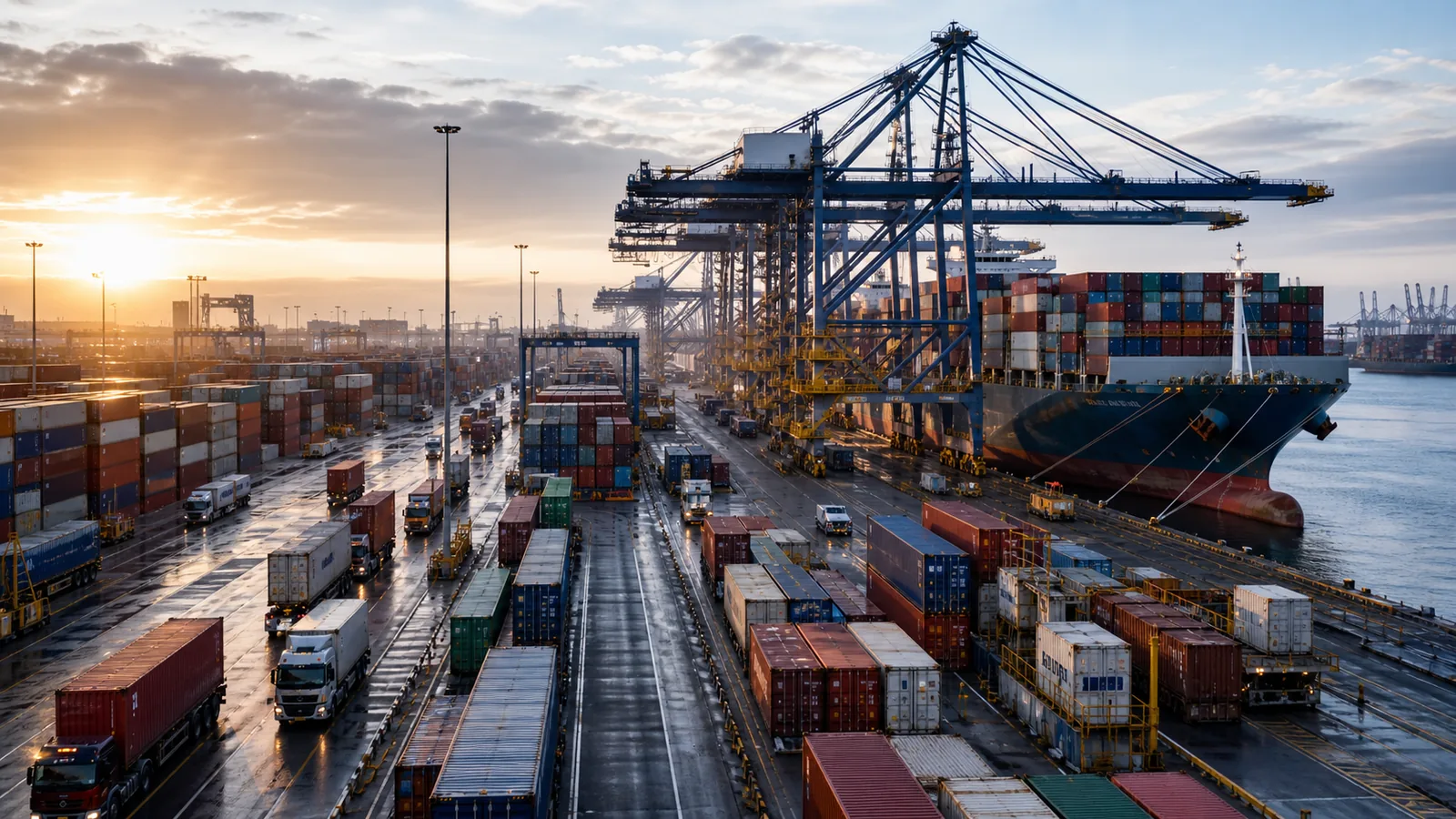
Why ocean freight rates are surging again: early peak season and tight container capacity
Container freight rates have moved sharply higher in recent weeks. The increase is not limited to the Transpacific. Asia-Europe and Asia-Mediterranean routes are also rising, while spot indexes, carrier surcharges and booking feedback all point in the same direction: the 2026 peak season appears to have arrived earlier than usual.
Drewry's World Container Index showed a 23% weekly rise on 4 June 2026, reaching USD 3,433 per 40-foot container. Shanghai to Los Angeles rose to USD 4,565, Shanghai to New York to USD 5,505, Shanghai to Rotterdam to USD 3,579, and Shanghai to Genoa to USD 5,089 per 40-foot container. The Shanghai Containerized Freight Index also moved higher at the end of May and beginning of June, rising to 2,571.73 points on 29 May and 2,726.48 points on 5 June.
These are not small adjustments. They suggest a broad repricing of container spot freight.
The rally has more than one cause
The short version is "early peak season." The full picture is more complicated.
First, some peak-season cargo has entered the market earlier than normal. In a typical year, U.S. and European retail restocking, holiday inventory and autumn sales preparation gradually lift volumes through the summer. This year, part of that volume appears to have moved into late May and early June.
Second, front-loading is exaggerating short-term demand. Front-loading does not necessarily mean final consumption has suddenly improved. It can also mean importers and brands are pulling cargo forward because of tariff windows, promotional events, bunker adjustment expectations or concern that space will become tighter later.
Third, Red Sea diversions are still absorbing effective capacity. Routing around the Cape of Good Hope extends sailing distance and round-voyage time. The physical fleet may not shrink, but the amount of usable capacity available in a given period falls.
Fourth, carrier rate actions and peak season surcharges are landing at the same time. Asia-Europe and Asia-North America services have seen new surcharge announcements and FAK rate adjustments in early June. For spot shippers, this reinforces the impulse to secure space and pricing earlier.
Together, these forces produce a tight short-term market. It is not just stronger demand. It is demand being pulled forward, routes taking longer, capacity buffers thinning and surcharges becoming effective at the same time.
Idle capacity is already low
The strength of a rate rally depends partly on how much spare vessel capacity can be brought back.
Recent industry data shows that idle container capacity is already low. In late May, the global container fleet was around 31.4 million TEU, while idle capacity was about 0.6%, equal to 59 ships and roughly 189,285 TEU. In the previous two weeks, carriers had already reactivated 21 ships, or about 46,542 TEU.
That matters. Rates are not rising in a market full of unused ships. Some idle tonnage has already been pulled back into service, but space is still tight. The short-term capacity cushion is thin, so additional bookings can move spot prices quickly.
The Freightos Baltic Index also points to a firmer early-June container market. Different indexes use different methodologies, but they are describing the same broad condition: short-term supply and demand are tight, and prices are adjusting quickly.
Real demand and front-loaded demand are not the same
The key question is no longer whether rates are rising. They are. The harder question is how long the demand behind the increase can last.
Booking activity is strong, but part of it likely reflects front-loading. From the carrier's point of view, front-loaded cargo is real cargo. From the point of view of end consumption, it may simply be future volume brought into the present.
That can create a familiar pattern. Cargo arrives early, space tightens and spot rates rise fast. Later, if underlying consumption or industrial demand does not keep pace, the natural cargo flow can soften after the early rush has passed.
The next few weeks still look firm. Surcharges are taking effect, diversions are consuming capacity, and peak-season psychology is building. But later in the summer, the market will start testing whether this is sustained demand or a concentrated pull-forward.
What this means for chemicals and raw materials
For chemicals, plastics, additives, raw materials and industrial goods, higher ocean freight rates are not just a logistics line item. They affect landed cost, delivery rhythm and quotation assumptions.
Low-value, heavy and bulky cargo is the most exposed. When freight rises by several hundred or more than a thousand dollars per 40-foot container, the unit logistics cost of basic chemicals, plastic products, packaging materials, additives and mid-to-low value industrial goods can move visibly. For high-value specialty chemicals, the freight share may be smaller, but delivery reliability still matters.
Shipping rhythm also changes. Red Sea diversions, port congestion, early peak-season bookings and temporary surcharges make transit times and booking certainty less stable. For cargo tied to inventory planning, production schedules or delivery windows, uncertainty itself becomes part of transaction cost.
This does not mean every chemical price will move in the same way. Freight pass-through depends on product value, route, contract terms and inventory position. But ocean freight has clearly moved back toward the center of cross-border chemical transaction economics.
What the next few weeks may look like
In the short term, the market still has support. Early peak-season cargo, front-loading, Red Sea diversions, low idle capacity and active carrier surcharges are unlikely to disappear immediately.
The medium-term picture depends on two variables. First, whether U.S. and European retail and industrial demand can keep generating cargo after the initial pull-forward. Second, whether carriers can relieve pressure through extra loaders, network adjustments and capacity management. If demand is mostly front-loaded, rates may stabilize or ease later in the summer. If demand continues, or if diversions and congestion worsen, high rates can last longer.
The main lesson from this rally is not just that freight rates are higher. It is that container shipping remains highly sensitive when several forces line up in the same window: tariff expectations, promotional inventory, fuel cost adjustments, diversions, carrier surcharges and peak-season psychology.
References
Insights
Sourcing or supplying what you just read about?
ChemAbout connects chemical buyers and suppliers worldwide. Tell us what you need, or list what you offer.
Post a purchase request
Free, no sign-up — stays anonymous
List your products
Requires a free company account
Related articles

Article6 min read
SINOSURE: what China's export credit insurer actually does
SINOSURE is China's policy-oriented export credit insurer, linking export contracts, buyer credit, country risk, claims and trade finance.

Article7 min read
German Chemical Companies Localize in China: What BASF, Evonik, Covestro and WACKER Signal for Supply Chains
German chemical companies are strengthening local production, application development and supply-chain response in China. BASF, Evonik, Covestro and WACKER show how the pattern is changing.

Article4 min read
Argentina's recycled plastic content certification: how INTI-ECOPLAS turns recycled content into traceable records
The INTI-ECOPLAS protocol does not treat recycled content as a broad label. It turns the claim into a chain of evidence: minimum percentage, material origin, polymer type, lots, mass records and production documentation.